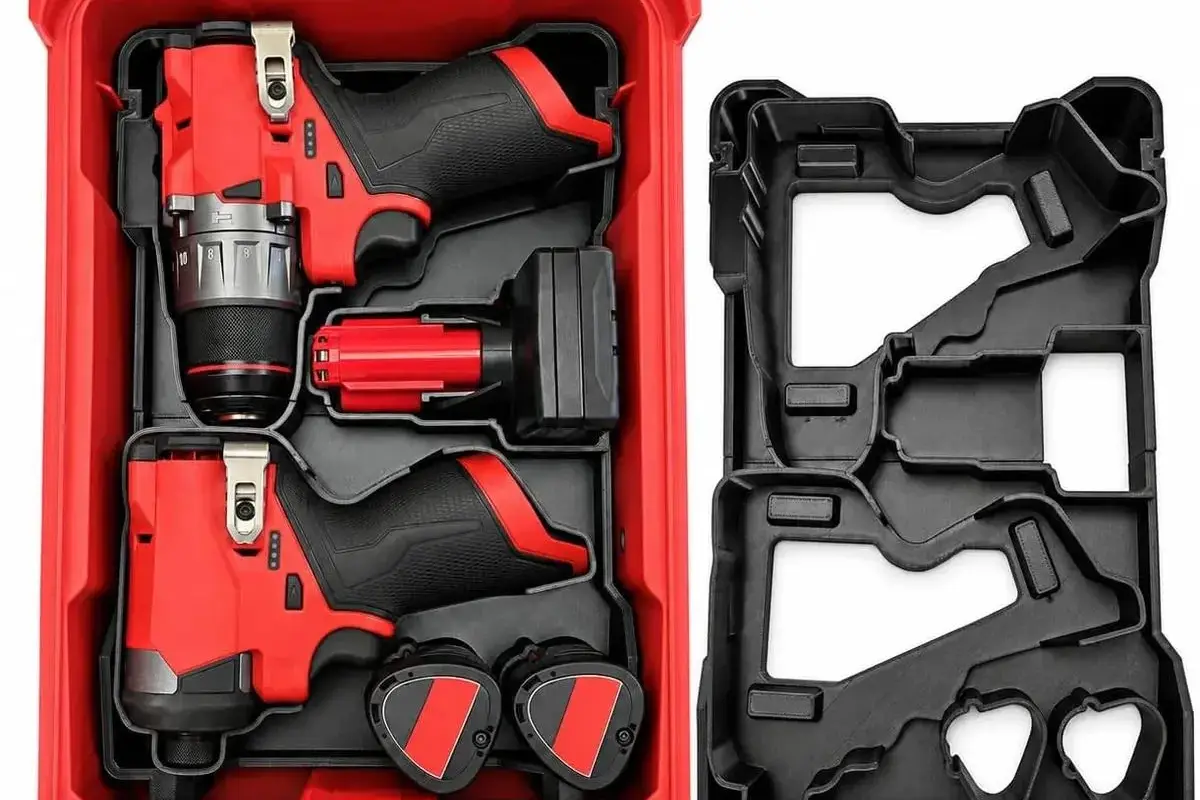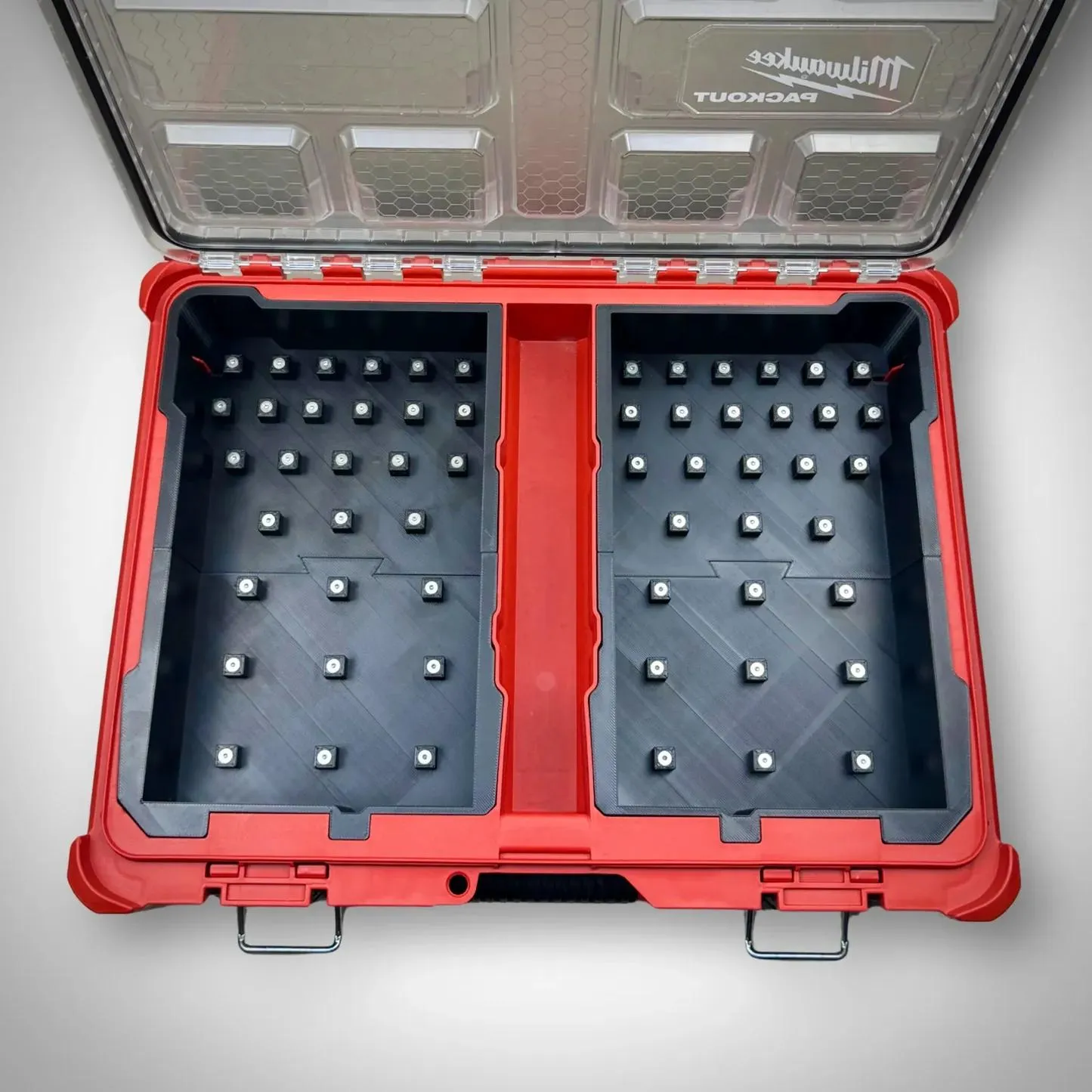
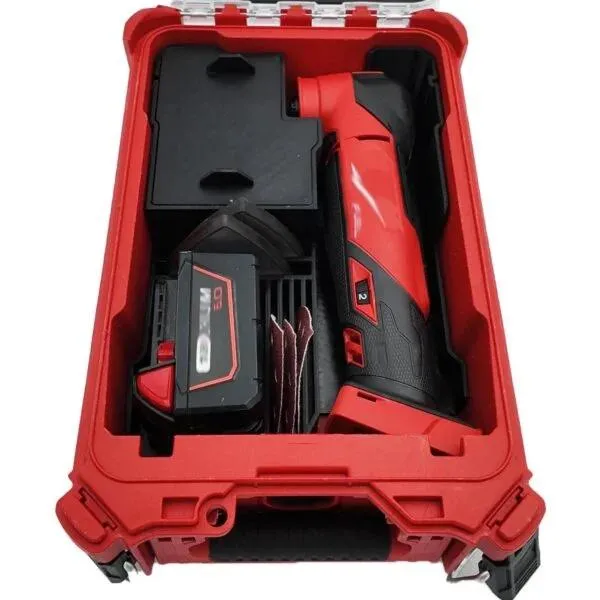
- Holds
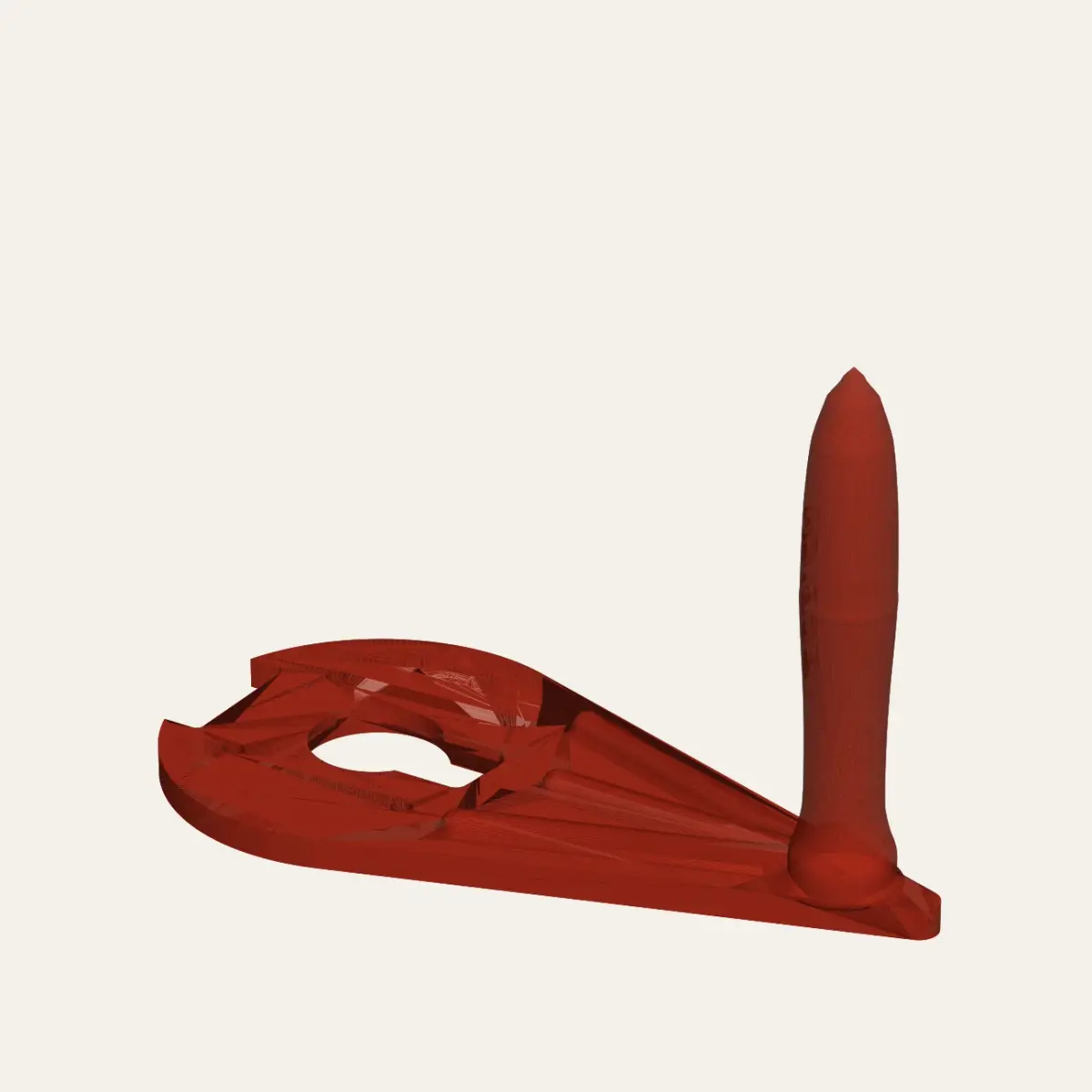
- Plate, turned handle, engraved grip
- Print time
- 9 hours
- Fits
- Milwaukee 2723-20
Router Base Plate v6
Tool accessories · Milwaukee 2723
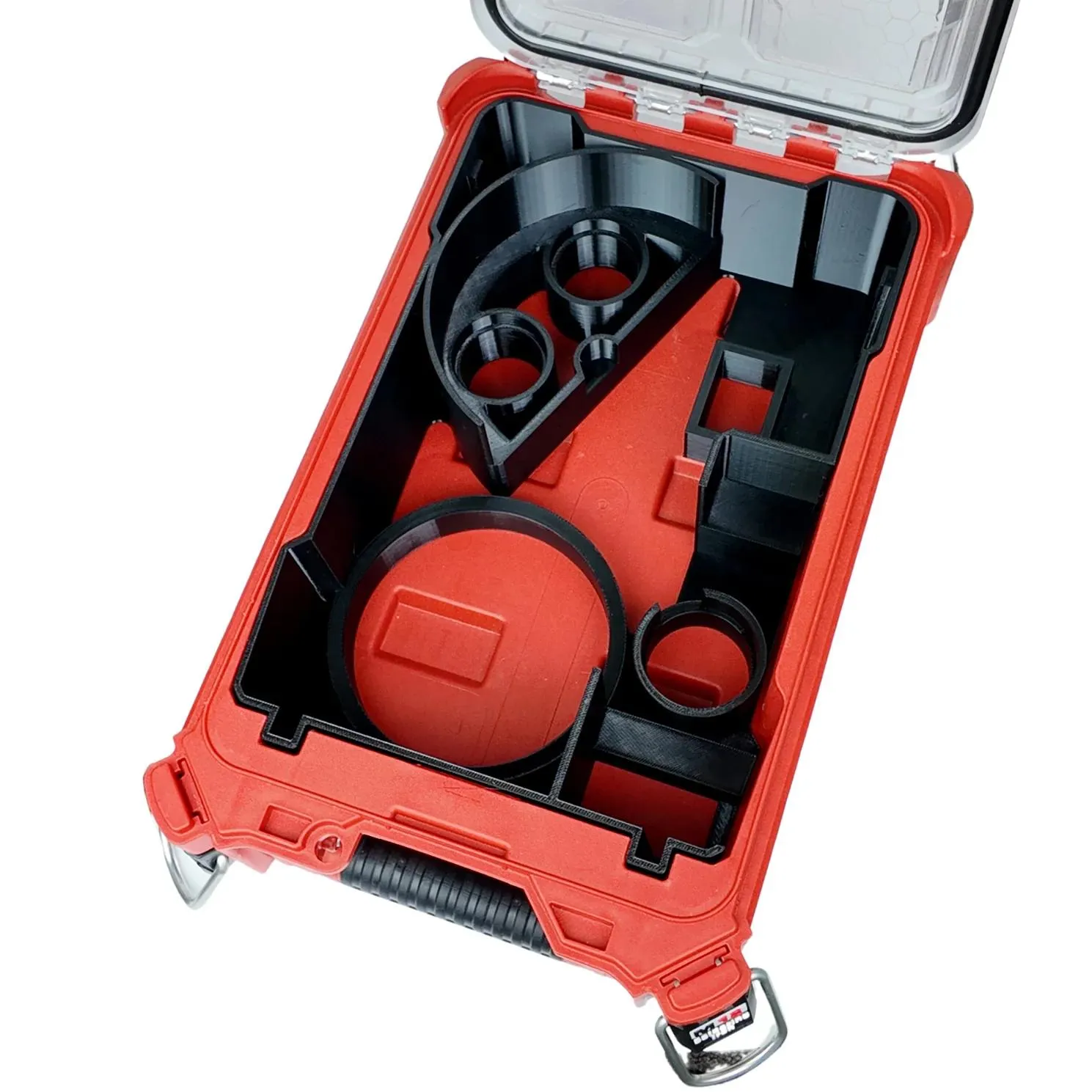
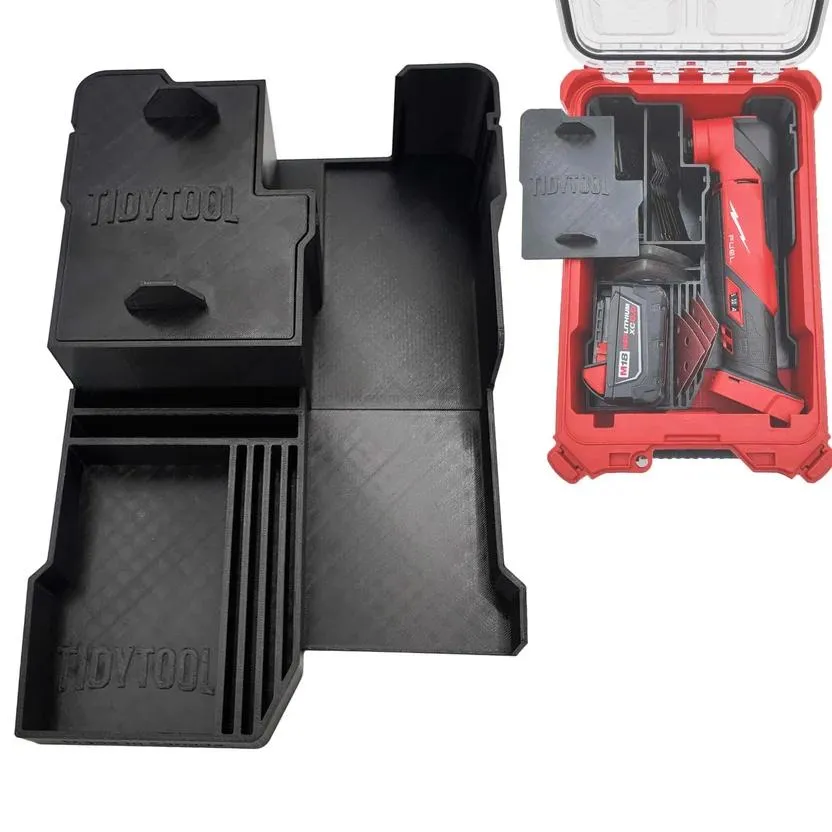
PACKOUT inserts and tool accessories, designed and printed in a working renovation shop — for the shop.
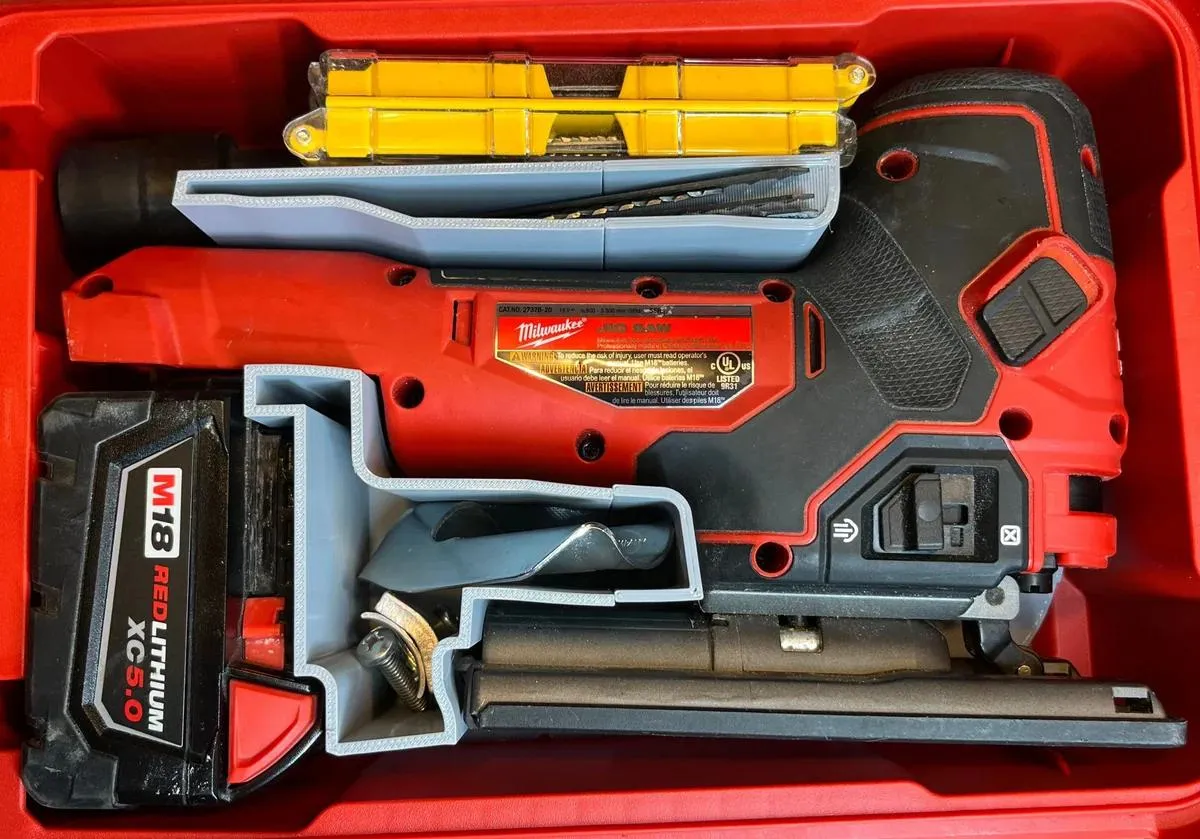
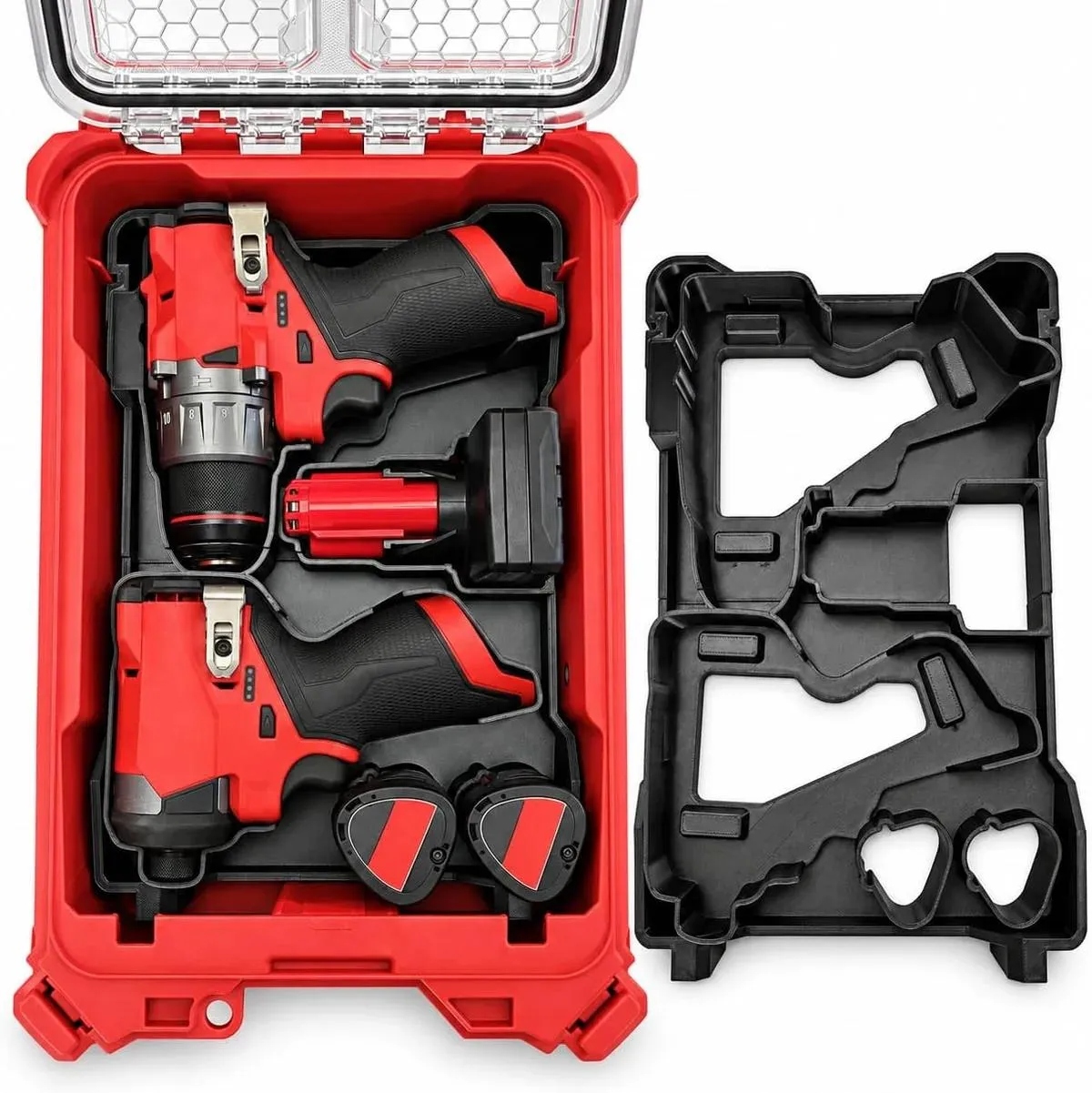
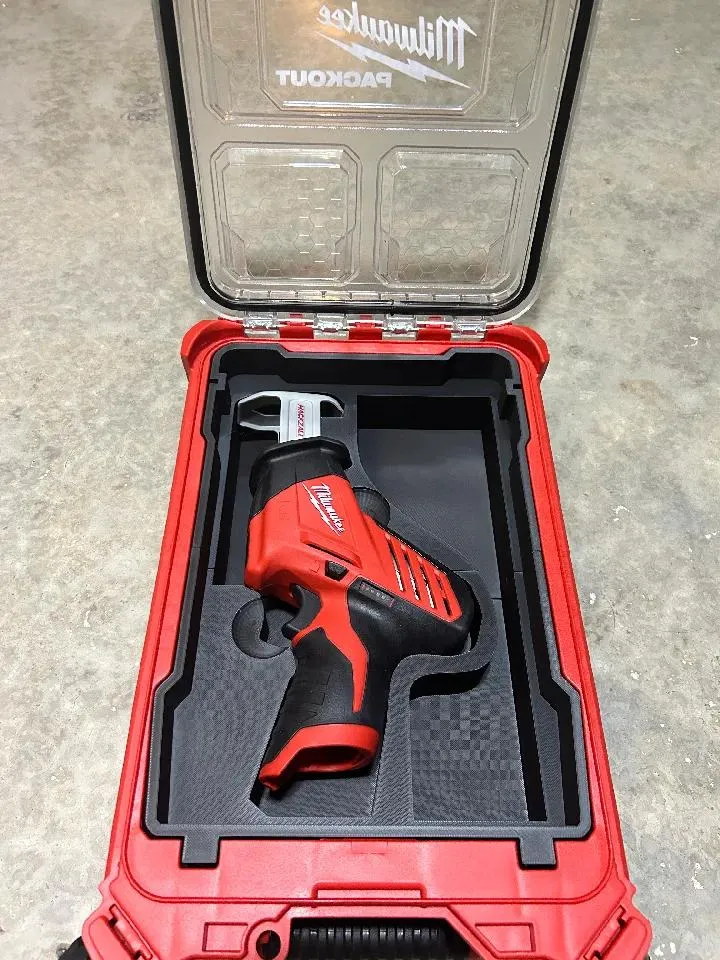
On the tool wall
Every print earns its place in a box, on a tool, or on the truck.
Tool accessories · Milwaukee 2723
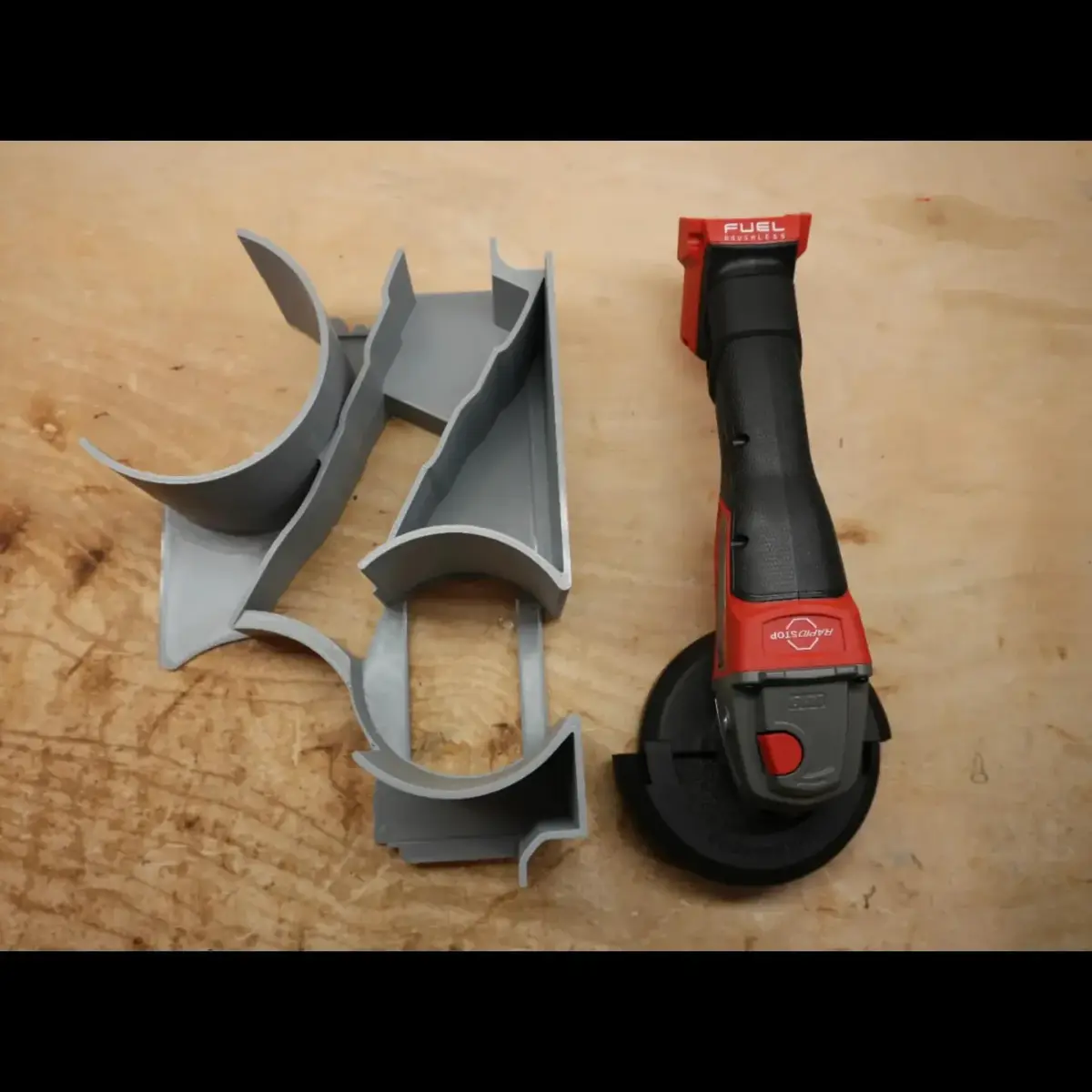
PACKOUT 8435 · Compact Organizer
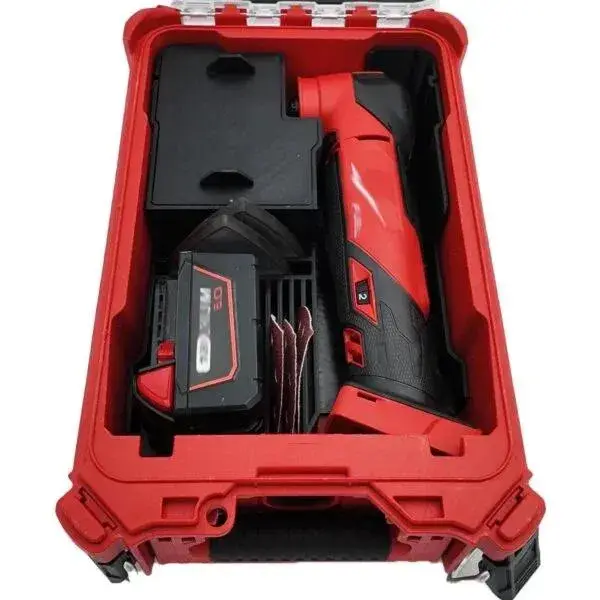
PACKOUT 8435 · Compact Organizer
What a print is made of decides where it can live.
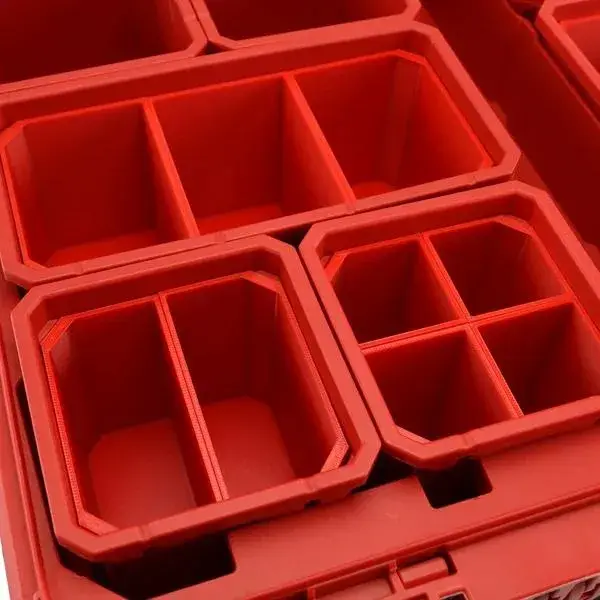
Printed at 245 °C. Tough, a little flexible, and fine in a hot truck at 80 °C.
Wet filament snaps, strings and splits layers. A night in the dryer before a big print.
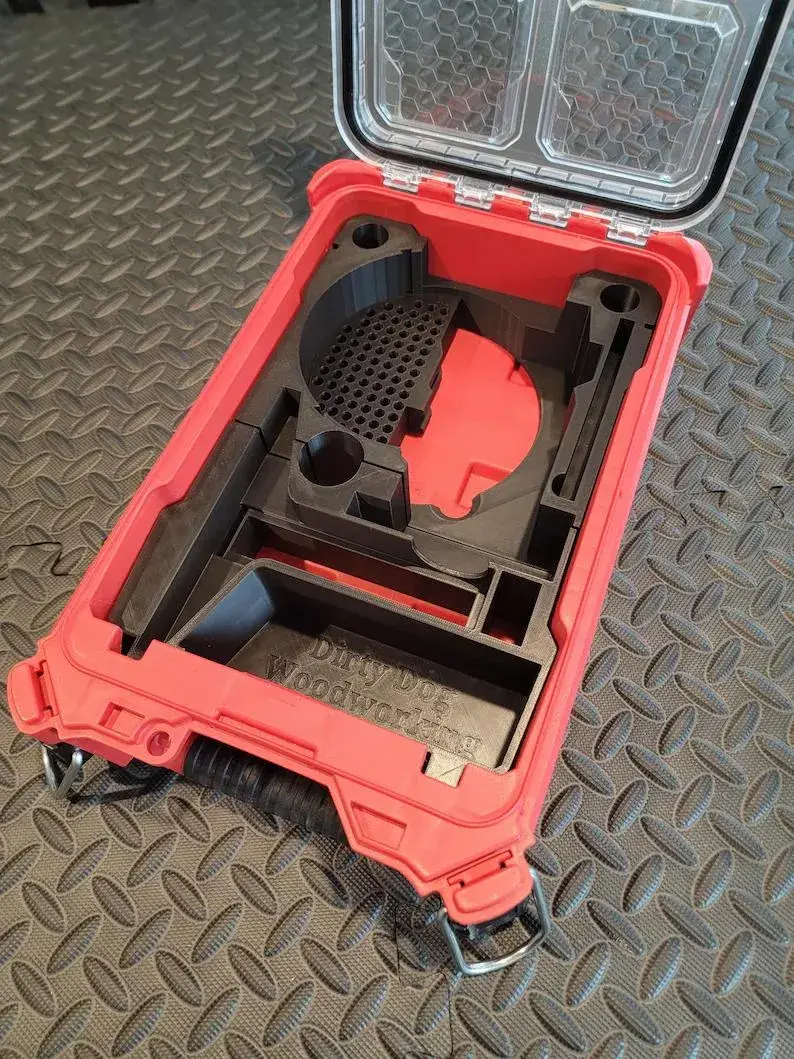
Every insert is drawn against the real box: 305 by 203 millimetres, no more.
The file stays. A broken insert is one overnight print away from replaced.
From file to jobsite
Downloaded, designed, or measured from scratch — then printed, fitted and used.
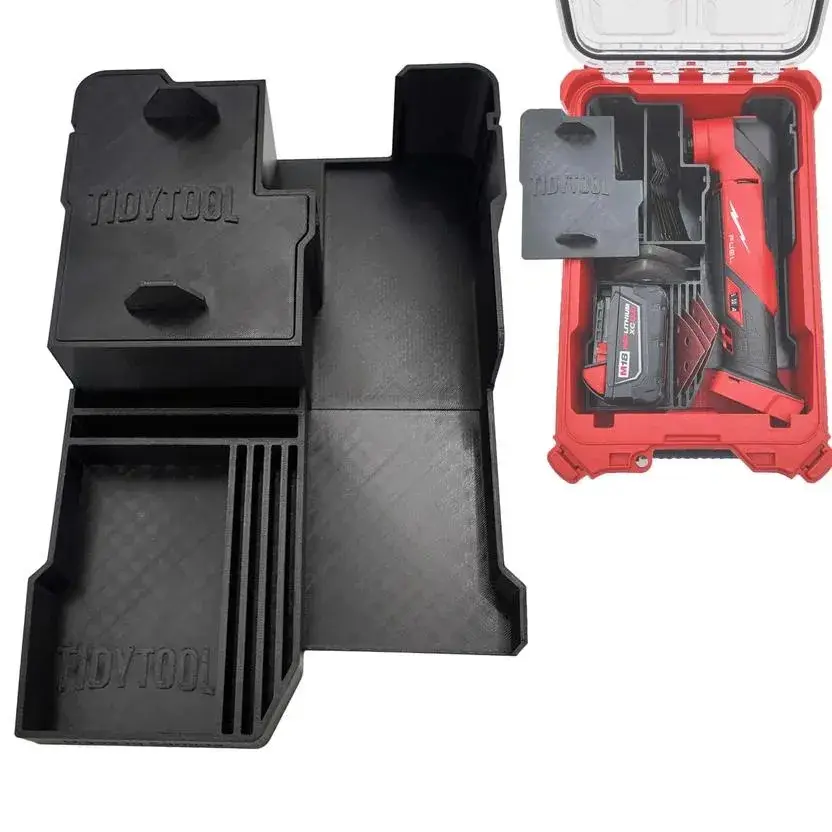
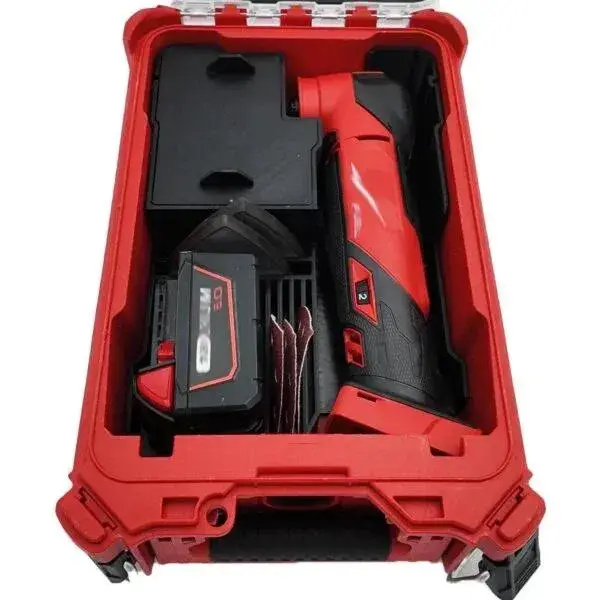
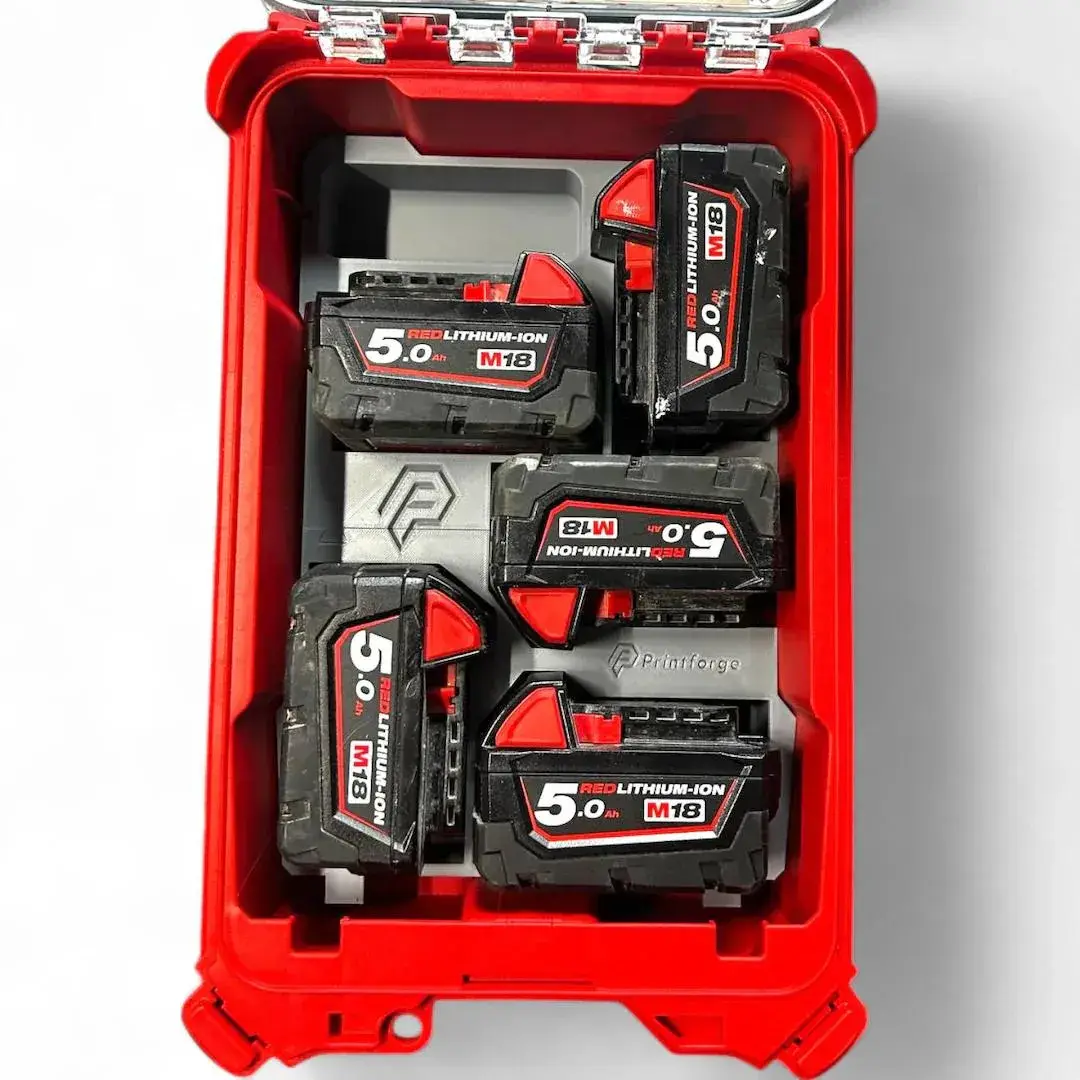
Some files are free designs by other makers, credited where they are due. The rest are drawn here, measured off the real tool.
PETG at 245 degrees, walls thick enough to drop. The printer works the night shift.
Fitted, loaded and onto the truck. If it rattles, it gets redesigned.
From the only customer
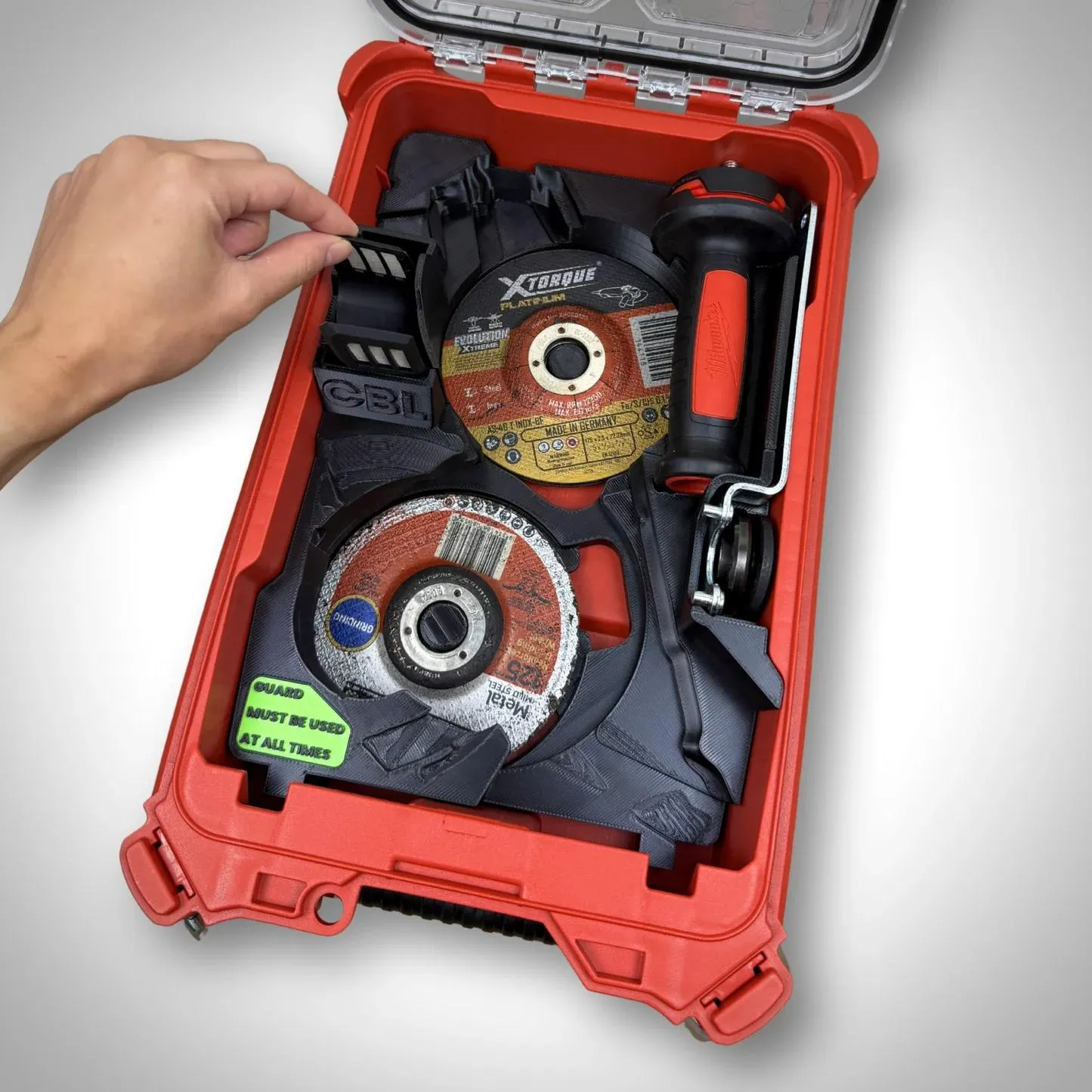
“The grinder finally has a home. The box closes, the discs stay where I left them.”
Printed a base plate for my router because the bought ones felt wrong. Mine fits.
Type a word — English or 中文 — and the list narrows as you go.
PETG for anything that works for a living: it prints at 245 °C, shrugs off drops and survives a hot truck. PLA is for indoor trays and jigs (托盤) — it softens near 60 °C, so a summer dashboard is the end of it.
Most inserts run five to twelve hours, overnight on the Snapmaker. Big flat trays are left to finish while the shop sleeps.
The file is kept for every print, so a cracked insert (托盤) is a reprint, not a reorder. One night and it is back in the box.
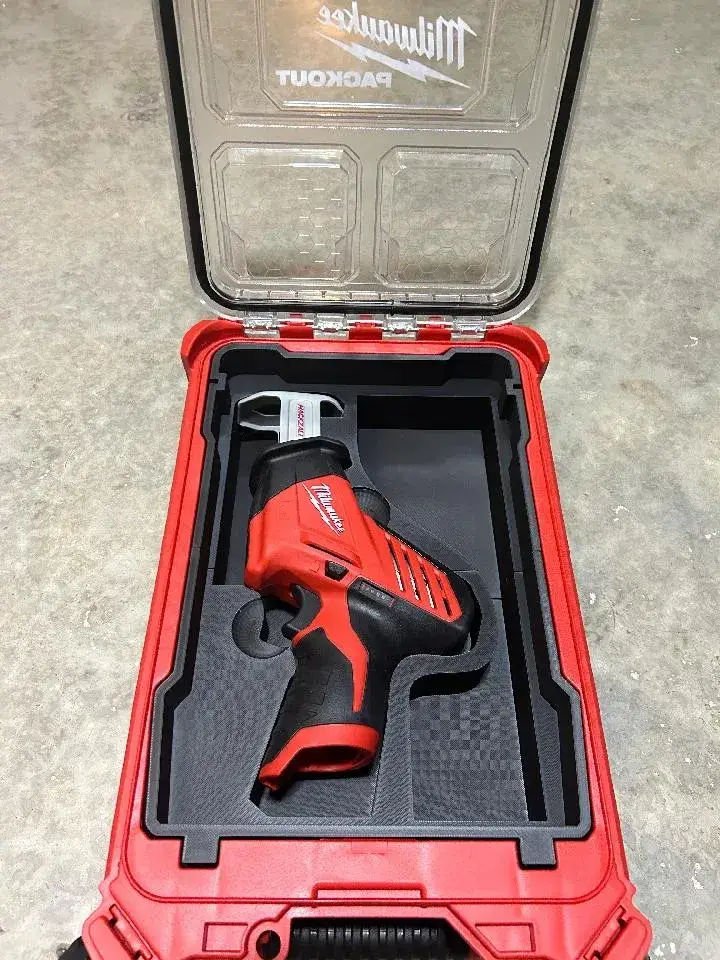
The PACKOUT 48-22-8435 compact organizer measures about 305 × 203 × 99 mm inside. Every insert here is drawn against the real box, not the brochure.
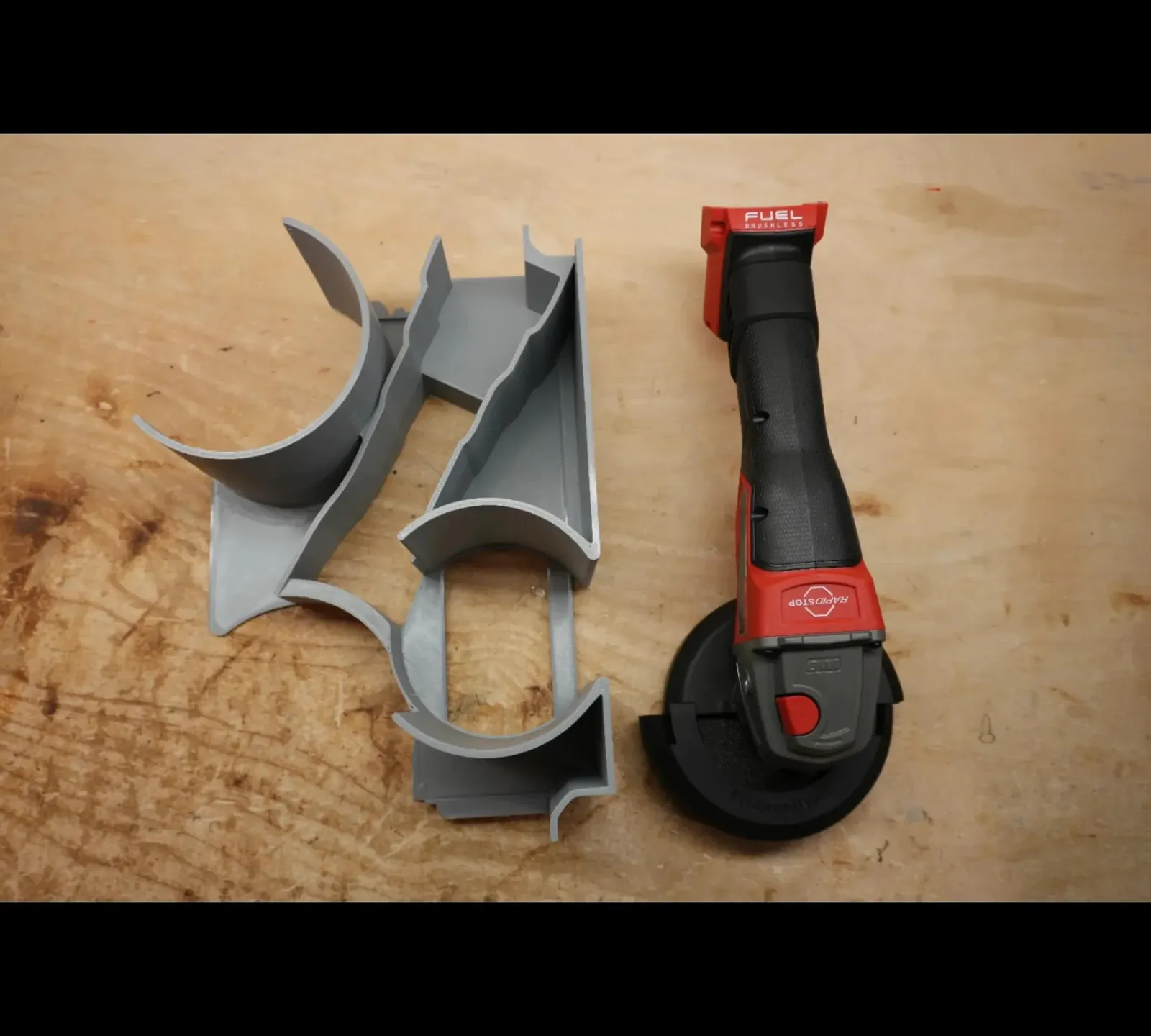
Yes — just. The 2880-20 angle grinder (角磨機) is about 323 mm long, longer than the box, so the insert seats it diagonally with the guard and side handle on. The lid closes; nothing rattles.
The 8435 compact organizer first, then the 8430 full-width box. The 8432 deep organizer is on the list. 修邊機 router and 圓鋸 circular saw accessories live under Tool accessories instead.
Not for sale. This is a personal workshop showcase and the customer list has one name on it. The prints earn their keep on real jobsites around the GTA.
A mix. Some are free designs by other makers, credited on each print. The rest — like the 2723 router (修邊機) base plate, now at version six — are measured and drawn in-house.
Richmond Hill, Ontario. A renovation shop by day — kitchens, bathrooms and basements — and a print bench by night.
Nothing matches that yet. Try another word, or write to us.
Write to us